Thursday, March 27, 2014

1980s Bandai x Nintendo Donkey Kong keshi gomu set

In the 1970s - perhaps the Golden Age of Japanese toys - sofubi, chogokin, jumbos, and many other toys reigned the toy world. The 1980s saw the growth of another toy type: rubber eraser (aka keshi gomu) toys. The technique wasn't invented in the 80s, and there were certainly keshi toys before then, but the 80s were the heyday, when Kinnikuman figures (which became M.U.S.C.L.E. toys in the USA) and many series based on licensed properties were produced.

Bandai led the way, both with Kinkeshi (Kinnikuman + keshi gomu = Kinkeshi) and other lines based on Mario Bros, Kamen Rider, Makaimura, Zelda, and many more, including Nintendo's Donkey Kong.

There were 2 Donkey Kong keshi sets (that I'm familiar with). The one shown here was released in 1994. The 16 figures were sold in gachapon machines, with two figures per gacha. So it was a relatively small set. Here's a look at the figures in the set:
I lurv my Canon S120 the way DK lurvs the rhino.

So, these standard figures, which are about 1-1.5" tall, stand on their own no problem.

Or sit and contemplate you.
 More after the jump:

Saturday, March 15, 2014

Clutter Magazine #20 (with my Splurrt article) available now!


Right on schedule, Clutter #20 has hit the stands. The issue contains my piece on Splurrt, the bulk of which is a lengthy interview I conducted with Joe Merrill. Joe and I put a lot of work into the interview, both before, during, and after, so please check it out.

The issue is free (with a nominal shipping fee), and you can get your copy here.

Tuesday, March 11, 2014

KK Reviews: Splurrt Toys


In this video, I review several Splurrt customs, while taking a look at a number of Splurrt resin and sofubi toys from over the years.  Make sure to check out my interview with Joe Merrill of Splurrt in the upcoming issue of Clutter Magazine.

Wednesday, March 5, 2014

KK Book Reviews - GI Joe: The Story Behind The Legend


GI Joe is probably the most iconic toy of the last 50 years. And it has stood the test of time, morphing from a heroic grunt in the 60s to a brass adventurer in the 70s to a cartoon driven 4” action figure in the 80s.

To most of us, the original 12” figure is, well, just a legend – something we’ve seen in photos or maybe at a toy show, but don’t know too much about. And yet every great toy has a great story behind it – the why’s and how’s of its development, the people behind it, and the design and production process.

That’s where books like GI Joe: The Story Behind the Legend come in. This is not a new book – it was published by Chronicle Books back in 1996. But that doesn’t matter. The original events all took place in the early 1960s, so this account doesn’t feel dated, even nearly 20 years after publication. I have to say, the book is flat out fascinating. If you’re a GI Joe fan or are interested in toy history, action figures, toy development, or just plain amazing stories about a year-long team effort to make something great, then you might want to check it out.

More after the jump:

Saturday, March 1, 2014

Pushead Marbled GID Skull Hevi releases at Secret Base

Today at Secret Base, new Pushead GID marbled Skull Hevis were released blind bag style. Bags were taped with what looks like black duct tape. As it turns out, there was not one, but two different Hevis released, and each bag contained one figure.

First let's look at pics of the display figure - GID base with green marbling:


Reminds me of the beautiful marbled green Skullwing released a few Super Festivals ago.
Fortunately I had a chance later on to snap pics of each of the figures bagged. Much obliged to the fellow who let me photograph his figure:
Standard release

Secret release. GID base with orange marbling. Notice the headers are different too.

Sunday, February 23, 2014

Tuesday, February 18, 2014

Announcement: Coming soon to Clutter - my interview with Joe Merrill of Splurrt!

I'm happy to announce that the next issue of Clutter magazine will contain an interview I did with Joe Merrill, the man behind Splurrt toys. Joe and I had a very enjoyable, wide ranging talk on many issues, including of course Splurrt toys, Joe's toy making process, the indie sofubi scene, and a lot more. Plus there will be never before seen photos. So make sure to check it out!

This will be issue #20 of the magazine, and it is scheduled to be in stores (DKE is handling store distribution) and in Clutter's hands by March 14. So keep an eye out on Clutter's site for more release details and ordering info.

Monday, February 17, 2014

Wednesday, February 12, 2014

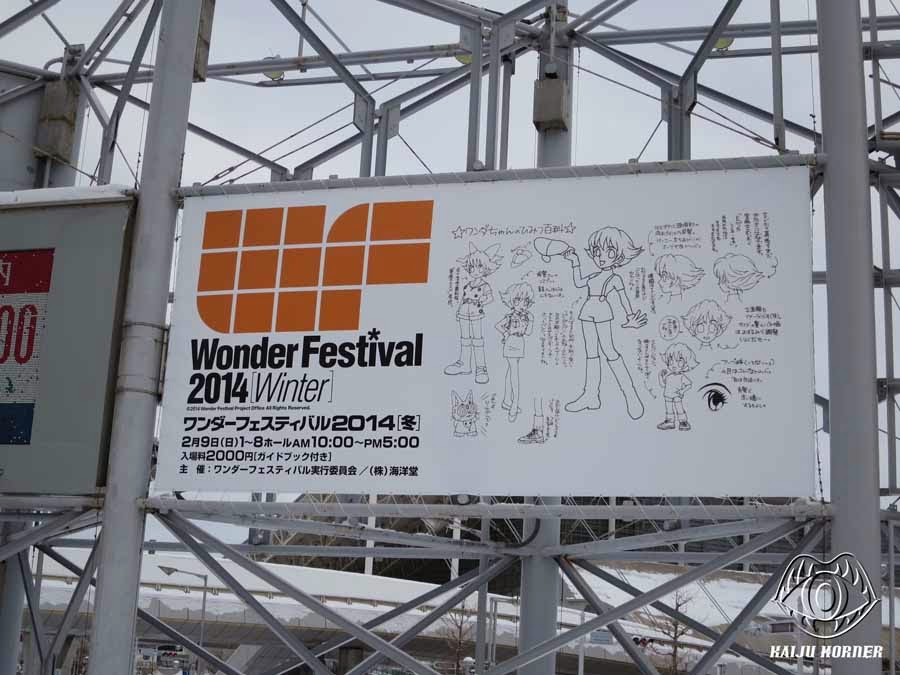
Wonder Festival 2014 (Winter) / ワンダーフェスティバル 2014[冬] Part 3: 3D Printing & the 3D-GAN Area

One of the neat things about recent Wonder Festivals has been a spotlight on the technology that's changing the toy industry. In the 3D-GAN (Geometry Application Network) area, a number of tech companies showed off their machines, products, and services.

In addition to straight-up 3D printers and toys made from them, there were companies with lithography technology, mass produced keshi gomu toys (made from molds that were created using 3D technology), and more.

Here's a video followed by stills of some of the booths.


Astec
These high quality keshi gomu toys are made using a unique injection molding process. The molds were made using 3D technology. Because of the precision of the process, they can make numerous molds for the same design, speeding up production, improving efficiency and consistency, and, I would think, lowering overall costs.

Interesting note: I had a nice chat with the person running the booth, and  he told me that these figures, along with a lot of other keshi gomu toys, are made from PVC resin. So although we often call them "rubber erasers," the material used to make them may be something else entirely.

More after the jump:
Monday, February 10, 2014

Wonder Festival 2014 (Winter) / ワンダーフェスティバル 2014[冬] Part 2: Indie Toys


Here is Kaiju Korner's main Wonder Festival Winter 2014 report: a look at indie toys, including sofubi, keshi, resin, and more.

Booths are arranged alphabetically.

Angel Abby

Bullmark and Yamanaya

Really cool info board about the way the Ultraman cast hands were made.
 200+ pics after the jump:

Sunday, February 9, 2014

Wonder Festival 2014 (Winter) / ワンダーフェスティバル 2014[冬] Part 1: Medicom Toys

Welcome to Kaiju Korner's coverage of Wonder Festival 2014 (Winter). We start with a look at the always fantastic Medicom Toys display, with looks at dozens of new and upcoming sofubi figures.
This wasn't an ordinary WF, as it came on the day after Tokyo's heaviest snowfall in decades. That had a very big impact on transportation, as both fans and dealers slowly rolled in over the course of the morning.
 On to Medicom's display....
Boom!
Heavy hitters right out of the gate! Kamen Rider...
Kinnikuman...
 More after the jump:

Friday, February 7, 2014

Vintage Keshi Gomu Packaging

Keshi gomu ("rubber eraser") figures are among the most popular toy collectibles in Japan. Maybe because of their size, or the instant nostalgia factor, or maybe the way they were distributed in so many outlets, people still love the little figures.

Keshi toys were sold in gachapon machines, as "candy/premium toys" (ex: buy a box of chocolate and get a little freebie figure), individually packaged with bags and headers, in sets, boxes, games...you get the picture.

I thought it would be fun to take a look at some of the varieties of packaging for these remarkably detailed little figures.
Here are some Gegege no Kitaro figures in traditional bag/header card packaging.

Robo Hachan keshi set with backing board + clear plastic window
 More after the jump:

Monday, February 3, 2014

Vintage Wind-Up Toys

The variety of cool toys made in Japan in the 1970s-80s is amazing. We cover a lot of sofubi on KK, but that's just the tip of the iceberg. You've also got chogokin, keshigomu, jumbos, talkers, belts, masks, rigs for bikes to turn your banana seat Stingray into a Kamen Rider Cyclone (oh yes, indeed...)

Then there are tin toys, a staple of Japanese toys going back more than half a century. A lot of them are really tough to find these days, especially with the boxes. Here's a look at a bunch of wind-up walkers I came across in Tokyo.
Barom 1 and Getter Robo

Ultraman Leo, Zaboga, Ultraman MAT, Mirrorman

Zaboga

Kamen Riders + Ultraman Leo

Check out the cool wheel action on this Rider!

Related Posts Plugin for WordPress, Blogger...